Last updated November 22, 2026
 Raised-panel steel
 Carriage house
 Modern flush
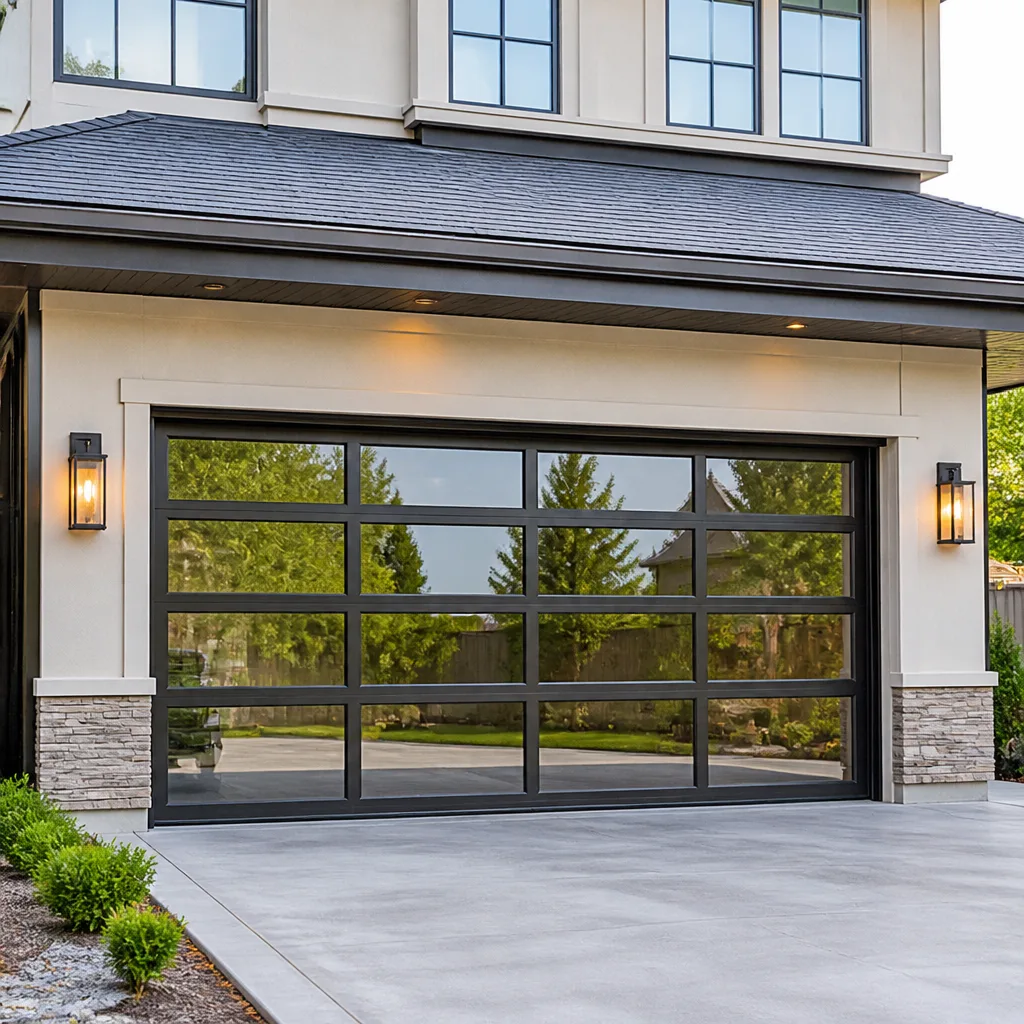 Full-view glass
 LiftMaster openers
 Chamberlain openers
Full 25-point door and opener safety check with every visit - springs, cables, rollers, tracks, and your LiftMaster or Chamberlain opener included
You get a price before we start. It does not change when the pro arrives.
Get your free estimateDIY vs Professional Garage Door: The Springfield Homeowner’s Decision Guide
Replacing a bottom weatherseal is a legitimate DIY job. Replacing a torsion spring is not. Not because it’s technically complex, but because a wound spring stores roughly 100 foot-pounds of torque, and an error at the wrong moment sends a steel rod across your garage at head height. The DIY-versus-pro question gets argued as a money debate, and that framing is why so many homeowners in Springfield end up with a stripped drum or a bent track and a repair bill three times what the original fix would have cost. This guide breaks every common garage door task into three columns: safe to do yourself, needs real mechanical skill, and don’t touch it. You’ll finish knowing exactly which jobs you can take on, which ones to hand off, and how to read the time-and-risk math for your own situation.
Quick Answer
Cosmetic and low-tension jobs like weatherseal replacement, lubrication, and visual inspections are genuinely DIY-safe. Springs, cables, and any work that requires loosening a torsion assembly are not – those carry injury risk that makes professional service non-negotiable regardless of your skill level. Track alignment, opener installation, and roller replacement sit in the middle: doable with the right tools and a willingness to stop if something feels off. In Springfield, most repair calls that start as a DIY project end up costing $300 or more because a $40 part failure cascaded into a larger repair.
Styles & brands we work with
- Raised-panel steel
- Carriage house
- Modern flush
- Full-view glass
- LiftMaster openers
- Chamberlain openers
Table of Contents
- The Risk and Skill Matrix: Every Task Ranked
- Genuinely DIY-Safe Jobs
- The Middle Tier: When Skill Matters More Than Confidence
- Why Springs and Cables Never Belong in the DIY Column
- The Real Dollar Cost of DIY Mistakes in Springfield
- Ohio Liability Exposure and UL 325
- Where to Buy Parts in Springfield (and What to Skip)
- The Time Math: When DIY Actually Costs More
The Risk and Skill Matrix: Every Task Ranked
Most garage door advice lumps every repair into one bucket and tells you to “call a pro.” That’s not useful, and it’s not honest. Plenty of tasks around a Springfield garage door are within reach for a homeowners with a socket set and a Saturday.
Here’s how we sort the work.
Tier 1: DIY-Safe (Low Risk, Low Skill)
- Weatherseal replacement – $15-$40 in parts, 30-60 minutes.
- Lubrication – a can of white lithium grease and 15 minutes.
- Panel wipe-down and inspection – free, and it catches problems early.
- Battery replacement in remotes and keypads – trivial.
- Photo-eye alignment check – eyeball the two sensors and make sure they point at each other.
Tier 2: Requires Mechanical Skill and the Right Tools
- Roller replacement – the door has to be lifted and blocked, and rollers come in 2-inch and 3-inch sizes that don’t interchange.
- Track straightening or re-alignment – needs a level and a willingness to loosen the right bolts, not all of them.
- Opener install (replacement of an existing unit) – basic wiring, ceiling anchoring, and force-limit adjustment per the manufacturer’s manual.
- Hinge replacement – assumes the door isn’t under tension at the hinge points.
- Panel replacement – a two-person job minimum, and getting the door balanced after is the tricky part.
Tier 3: Professional Only (Injury or Structural Risk)
- Torsion spring replacement – high-tension, wound under load.
- Extension spring replacement – same principle, different geometry.
- Cable replacement – cables hold the door’s weight and snap under stress.
- Drum replacement – requires relieving spring tension first.
- Bottom bracket work – the bracket is under spring tension.
- Full door installation or heavy door replacement – lifting and balancing a 150-300 pound assembly.
The whole point of a matrix like this is that “I’m handy” isn’t a useful category. What matters is which task you’re standing in front of. A homeowner who’s installed a ceiling fan can reasonably swap rollers. That same homeowner should not be winding a torsion spring. In Springfield, we’ve seen plenty of tiers get mixed up, and it’s almost always the spring that gets someone hurt.
Genuinely DIY-Safe Jobs
Start here if you want to save money without borrowing risk. These tasks don’t involve stored energy, and a mistake means a small redo, not a hospital visit.
Weatherseal replacement is the highest-value DIY job on the door. The bottom rubber weatherseal shrinks and cracks after several Ohio winters, and once it stops touching the floor, you’re paying for it in heat loss and pest entry. The seal is held by a track on the bottom section. Pull the old one, slide a new one in, trim to length. An hour at most.
Lubrication matters more than most people realize. The hinges, rollers, and torsion tube all need periodic white lithium grease. Not WD-40 – that’s a solvent, not a lubricant, and it will dry out the moving parts faster than doing nothing. Once or twice a year, depending on how much dust and grit ends up in the tracks, is enough in this climate.
The monthly safety check is free and catches problems early enough to avoid a full spring replacement. Run through this list:
- With the door closed, pull the red release handle and try to lift the door by hand. A properly balanced door lifts with one hand and stays where you put it.
- Disconnect the opener and check that the door closes fully without gaps.
- Wave an object in front of the photo-eye sensors to confirm the door reverses.
- Test the auto-reverse with a 2×4 laid flat under the closing door – the door should reverse on contact.
- Run a finger along the torsion spring to feel for a visible gap or break.
- Look at the rollers for flat spots or cracks.
None of that involves loosening anything under tension. If something in the inspection looks wrong, that’s when you graduate to the next tier down. For visual diagnostics and general repair calls, garage door repair is a reasonable next step if you’d rather not troubleshoot further.
In our experience, homeowners in Springfield who start with the safety check catch most problems before they become expensive. The door doesn’t fail overnight. It gives warning first: a rattle, a hesitation, a slow reversal.
The Middle Tier: When Skill Matters More Than Confidence
Tier 2 jobs are where confident homeowners get into trouble. Not because they aren’t capable, but because the tool list and the time estimate are bigger than the YouTube video suggests.
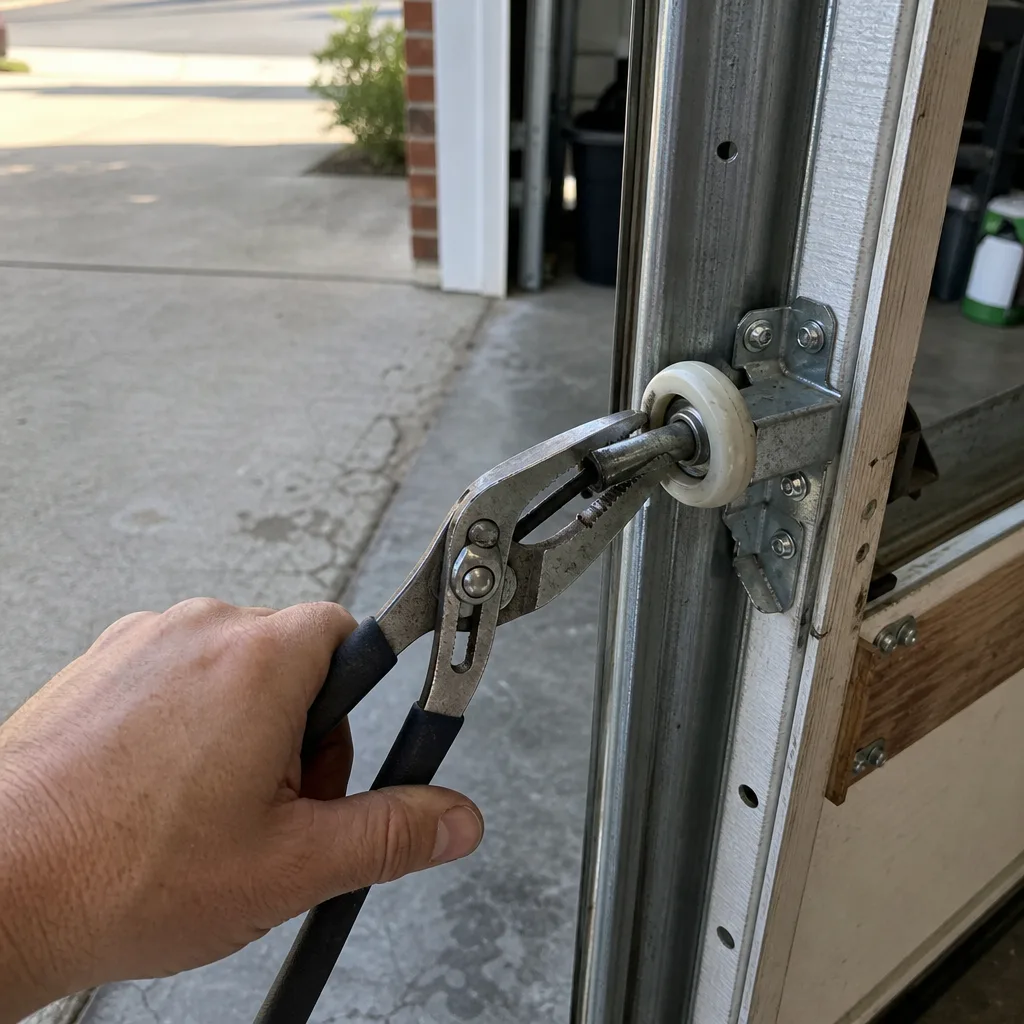
Take roller replacement. Sounds straightforward – pull the old roller, slide the new one in. But the door has to be lifted off its track to free the roller stem, which means the door is now supported by you and a pair of clamps, and if the door has a broken spring or a cable that’s already starting to fray, that lift is where something fails. The rollers themselves come in two common diameters, and the small hardware store often only stocks one. Roller replacement is a $20 part job with $200 of consequence if the door comes down wrong.
Opener installation is the other one worth thinking carefully about. Replacing an existing opener in a Springfield ceiling is doable for someone comfortable with a ladder, a drill, and low-voltage wiring. The part where homeowner installation most often fails is not the wiring. It’s the force-limit and travel-limit adjustment. An opener that’s been installed but not adjusted properly will crush a small object before reversing, or worse, fail the safety reverse test entirely. That’s not a skill problem. It’s an adjustment step that most people skip because they don’t know it’s required.
Here’s the mid-tier rule of thumb: if the job requires lifting or holding the door while you work, and you don’t have a second person and a proper support, stop. Borrow the second person or call it in. There’s no award for doing it alone.
Why Springs and Cables Never Belong in the DIY Column
This is where we hold the line. Not because we want the work, but because spring and cable repair is the one category on any garage door that can kill a healthy adult in under a second.
Torsion springs, mounted horizontally above the door, are wound to store the energy that lifts the door. A standard residential spring on a Springfield door holds roughly 100 foot-pounds of torque. If you loosen the set screws on a winding cone without inserting the correct winding rods first, that spring uncoils instantly – and the metal winding bar, if you’ve got one in it, becomes a projectile. The door also drops. A 200-pound door falling from an open position is not survivable if you’re underneath it.
Extension springs, common on older doors, run along the horizontal tracks and are somewhat less dramatic but still dangerous. They also require safety cables running through the center, and plenty of older doors in Springfield were installed before that was standard. If you see an extension spring with no safety cable, do not touch it.
Cables are the other silent risk. They’re under the same tension as the door’s weight, and they fray before they fail. By the time one snaps, it’s usually at the point where you’re standing next to it.
What you can do safely: look. If you can see a visible gap in the torsion spring, if the door is hanging crooked, if the cables are visibly frayed, that’s your cue to call. garage door spring repair is the work we do most often, and it’s a category of job that general handymen typically decline for the same safety reasons.
The safety caveat, stated plainly
If there’s any doubt in your mind about whether the work involves stored spring tension, assume that it does. Put the tools down and have a trained technician handle it. That’s the safety call we make on every job, and it’s the one we’d make in our own garages.
The Real Dollar Cost of DIY Mistakes in Springfield
The math on DIY mistakes usually gets presented as a scare tactic. It doesn’t need to be – the numbers do the work.
Here’s how a small, inexpensive repair turns into a large one:
- Stripped drum ($180-$340 repair): Attempting cable work without relieving spring tension strips the cast-iron drum where the cable winds. The drum has to be replaced, and the door has to be rebalanced.
- Bent track ($150-$300 repair): Lifting the door without supporting it properly bends the vertical or horizontal track. Rocking the door to free it often bends the other side too.
- Misaligned opener ($90-$180 repair): An opener that’s been installed with the wrong force limit or a crooked rail bangs against the door, strips the gear, or drives the door into the floor. The gear kit is a separate part.
- Broken torsion spring after a DIY attempt ($180-$340 per spring): A spring that fails under hand-loading often damages the center bearing plate and the torsion tube along with it. That’s a spring job plus hardware.
- Door off the track ($250-$500 repair): The worst case. A door that comes out of the track during a DIY attempt typically warps a panel and bends the track assembly. Both have to be fixed.
The pattern across all of these: a $20-$60 part and 30 minutes of the wrong technique becomes a $180-$500 repair call. That’s not a scare tactic. It’s the actual spread between a successful DIY go and a failed one, and in our experience it’s why most DIY garage door projects in Springfield end with a call anyway. The important thing to know before you pick up the wrench is which category you’re in.
The second piece of the cost conversation: the task isn’t always the task. What starts as “I’ll just replace this seal” turns into “I noticed a gap in the spring while I was down there.” That’s when a $30 Saturday job becomes a spring call. It’s also the reason to know what you’re looking at before you start.
Every price we give is quoted and agreed before any work starts. Springfield Garage Door Repair Experts doesn’t work off hourly rates that run up while the technician is on site. The written estimate is the price.
Ohio Liability Exposure and UL 325
The liability angle is the part of DIY garage door work that most articles skip. It matters, and it’s worth understanding before you install your own opener or spring.
UL 325 is the safety standard that governs automatic garage door operators. It covers the safety reverse feature, the photo-eye system, the force limits, and the entrapment protections that make the door safe around people, pets, and vehicles. Every opener sold new in the US is designed to meet that standard – but the standard is met only if the opener is installed and adjusted per the manufacturer’s instructions.
That’s the part that concerns us from a liability standpoint. If you install your own opener and skip the safety-reverse adjustment, or if the photo eyes are wired to the wrong terminals and the door doesn’t reverse on contact, and someone gets hurt – a child, a pet, a visitor – the question that comes up in an insurance claim is whether the installation followed the standard. A homeowner-performed installation that doesn’t meet UL 325 is a real problem for your coverage position. It doesn’t guarantee a denied claim, but it complicates it, and insurance carriers aren’t friendly to unpermitted electrical work that fails a known standard.
The other side of the liability question: unpermitted work. Some cities in Ohio require a permit for electrical work at the opener or for structural modifications to the door header. Before any installation, check with the City of Springfield’s building department. They’ll tell you the right answer faster than guessing will.
For homeowners who are weighing this seriously, we’re direct about the trade: garage door opener repair and installation is one place where paying a technician to do the final adjustment is worth the cost. Most of the labor cost on an opener install is getting the unit mounted straight and the force limits dialed in correctly, not the electrical part.
Where to Buy Parts in Springfield (and What to Skip)
If you’re going to DIY the Tier 1 and Tier 2 tasks, buying the right part matters more than buying the cheapest part. Consumer-grade hardware fails faster, and the second failure often costs more than the good part would have.
A quick note on sourcing: home improvement chains in Springfield stock solid consumer-grade parts for weatherseal, rollers, hinges, and basic opener accessories. They typically don’t stock professional-grade torsion springs, cast-iron drums, or heavier-gauge cables. Those come through garage door supply houses, which often won’t sell the high-tension components to homeowners for safety and liability reasons.
Where the parts matter most:
- Rollers – nylon rollers last longer than plastic and run quieter, but the standard 2-inch and 3-inch diameters don’t interchange and most consumer stores only carry one size.
- Weatherseal – the cheap vinyl crack out in one Ohio winter. Buy a rubber seal.
- Springs – never buy a torsion spring from a consumer store unless the exact wire gauge, inside diameter, and length match the original. A spring that’s off by one wire size will fail early or lift the door unevenly. This is also the part where the pro-grade supply pipeline is the realistic one.
- Openers – buy the same brand and rail type as the existing unit to avoid retrofitting the header bracket. A LiftMaster or Chamberlain unit installs on the same rail pattern as most existing openers, but a Chamberlain install from a Genie platform means a new mount. Stick with the brand in the ceiling.
Raynor and Genie are both platforms we work on regularly, and they’re good illustrations of why brand matching matters. Raynor parts aren’t interchangeable with the big consumer brands, and Genie openers have their own drive configuration that doesn’t take standard LiftMaster accessories. Buying the wrong brand means buying twice.
The Time Math: When DIY Actually Costs More
There’s a calculation most DIY-vs-pro articles never do: the honest time cost. Let’s do it.
A trained technician replaces a set of rollers in 45 minutes. A first-time homeowner takes 3-4 hours, because they have to figure out the lift, find the right size rollers, and re-lift the door a second time because the first roller went in the wrong end. Multiply that 3-hour delta by your effective hourly rate – not your salary divided by hours worked, but the number you’d honestly put on your Saturday.
If your time is worth more than $60 an hour, the DIY math on a mid-tier job stops making sense the moment it goes past an hour. If you’re in a position where a Saturday is genuinely free and you enjoy the work, the math looks different, and there’s nothing wrong with that calculation either. This is a personal decision, not a moral one.
Two more time factors to weigh:
- Tool cost. A torsion job requires specific winding rods and the correct-size socket set. Buying those once costs more than the labor on a single spring repair.
- Learning curve. Every internet tutorial assumes a specific door configuration. Springfield has a mix of older single-car doors from the 1980s and newer double-car doors with high-lift tracks – the same technique doesn’t apply to both.
On the repair side, the speed advantage of a professional matters too. When a spring breaks and the door won’t open, a professional is typically on site the same day, and the door is back in service in under two hours. A DIY repair, done on a weekend, is two to three days of a stuck door. For a lot of Springfield households, that closed garage door is also the main entry point to the house.
If you’re weighing whether repair or replacement makes more sense for a door that’s given you several problems, our guide to the Springfield Garage Door Repair Experts breaks down the decision points between repair, opener replacement, and a full door install.
Common Mistakes to Avoid
- Winding a torsion spring with a screwdriver or a socket handle instead of the correct winding rod. The tool exists for a reason – it’s sized to sit fully in the winding cone so it doesn’t slip out under load. Anything that slips out is going into the air.
- Lubricating tracks with grease or WD-40. Both attract grit and dust, and in a Springfield garage the tracks collect enough as it is. Use white lithium grease on the moving parts, keep the tracks dry and clean.
- Disconnecting the opener without knowing the center of gravity. Once you pull the release handle, the door is supported by the springs alone. If the springs are weak, the door comes down under its own weight.
- Installing a new opener without adjusting the safety reverse. Every opener ships with an adjustment procedure in the manual, and skipping it is the single most common cause of a UL 325 failure in a homeowner install.
- Buying rollers in the wrong size. Roller stems come in 2-inch and 3-inch, and most stores only carry one. Measure the old roller before you leave the house.
- Using an extension-spring door without a safety cable. If you can see an extension spring without a steel cable running through it, that’s the first thing to fix, not the last.
- Assuming a wobble is a minor problem. A crooked or shaking door is usually a sign the track is off or the springs are out of balance. It doesn’t get better on its own.
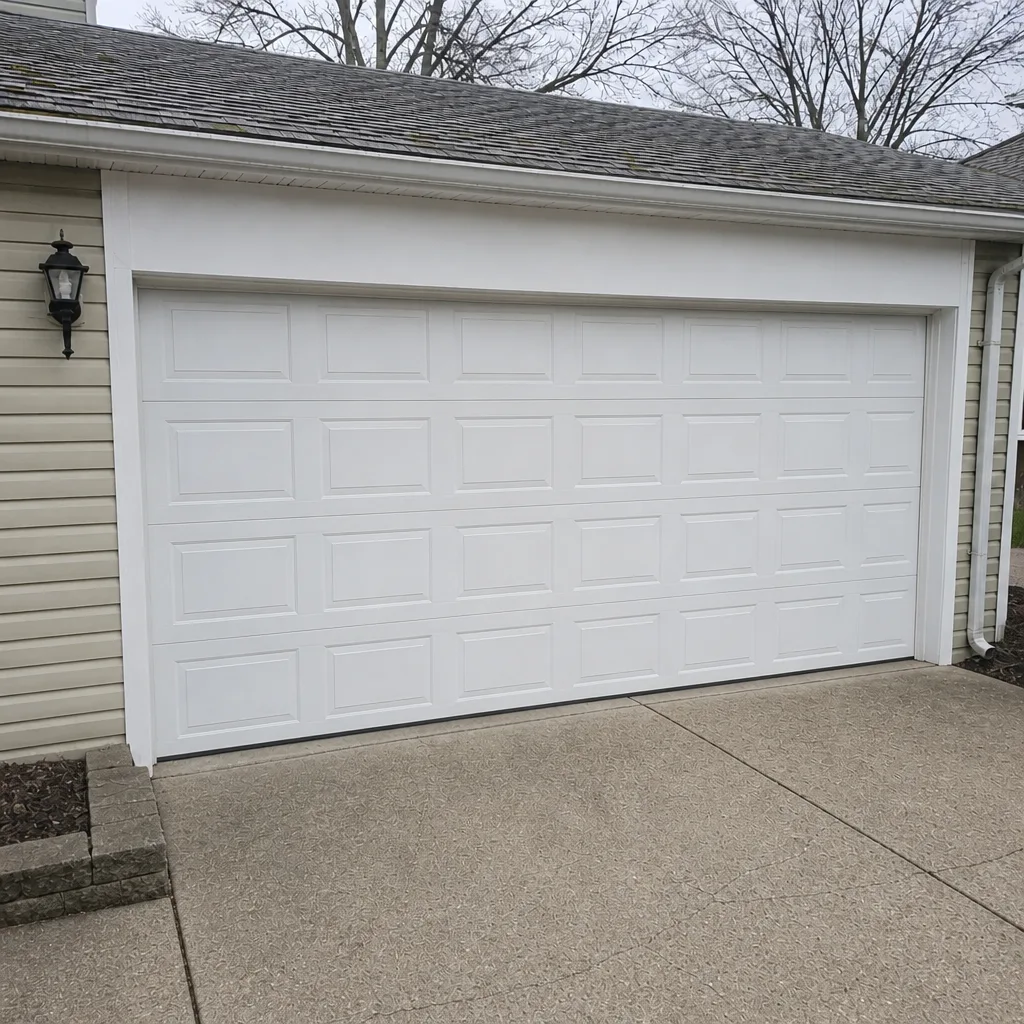
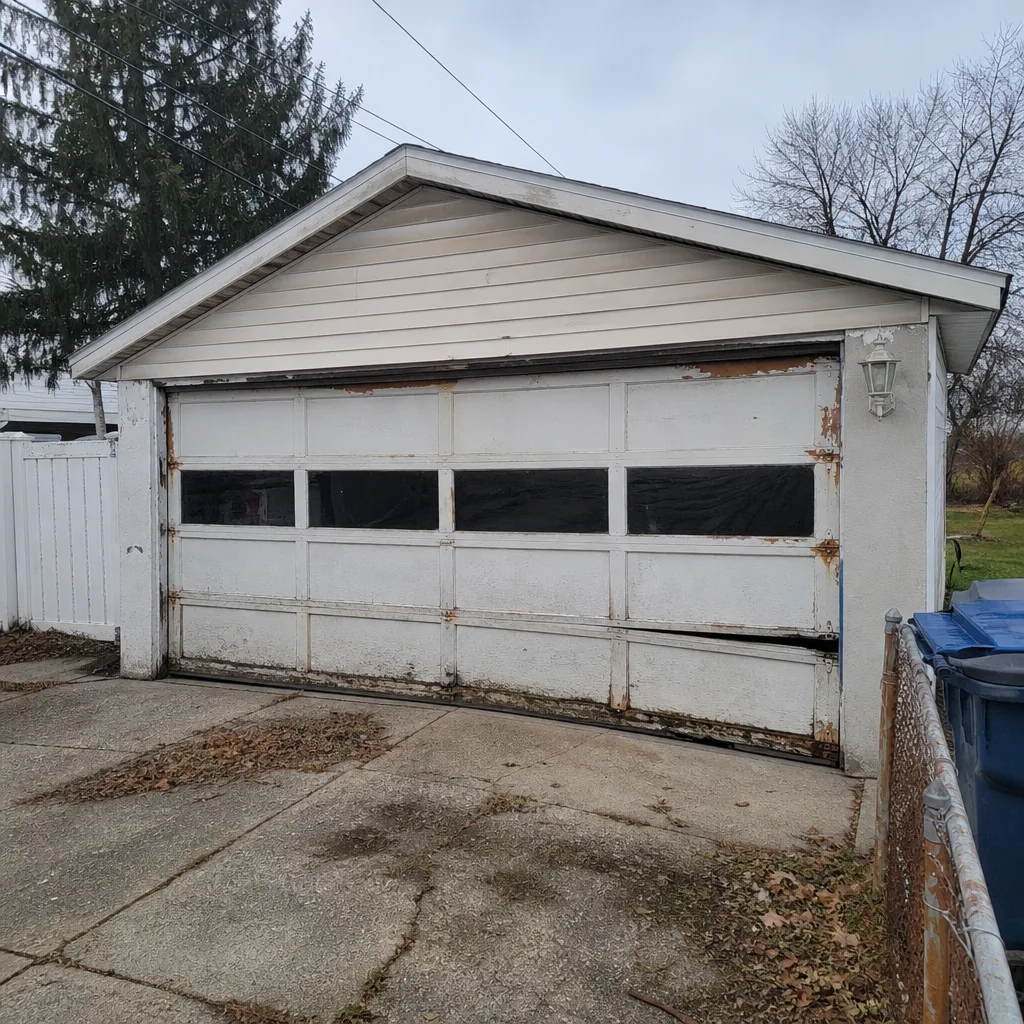
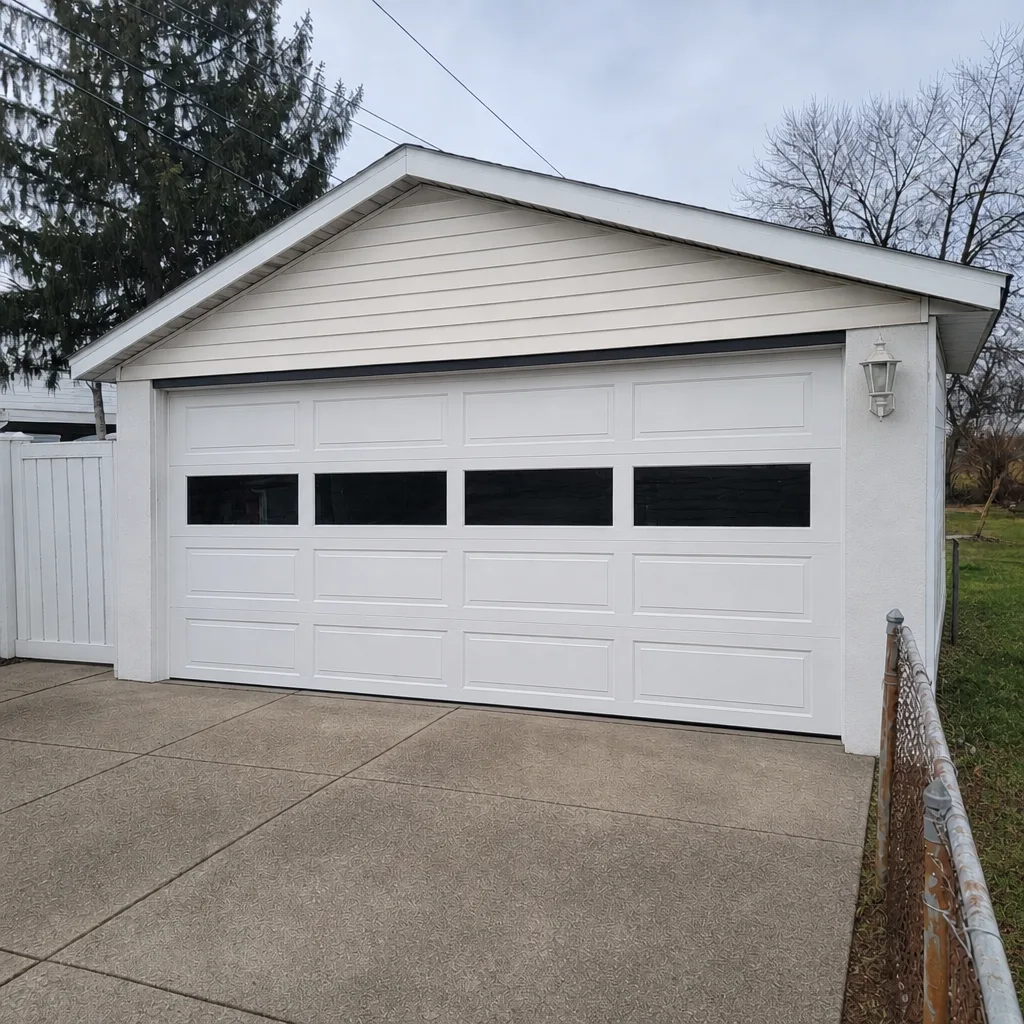
See the difference
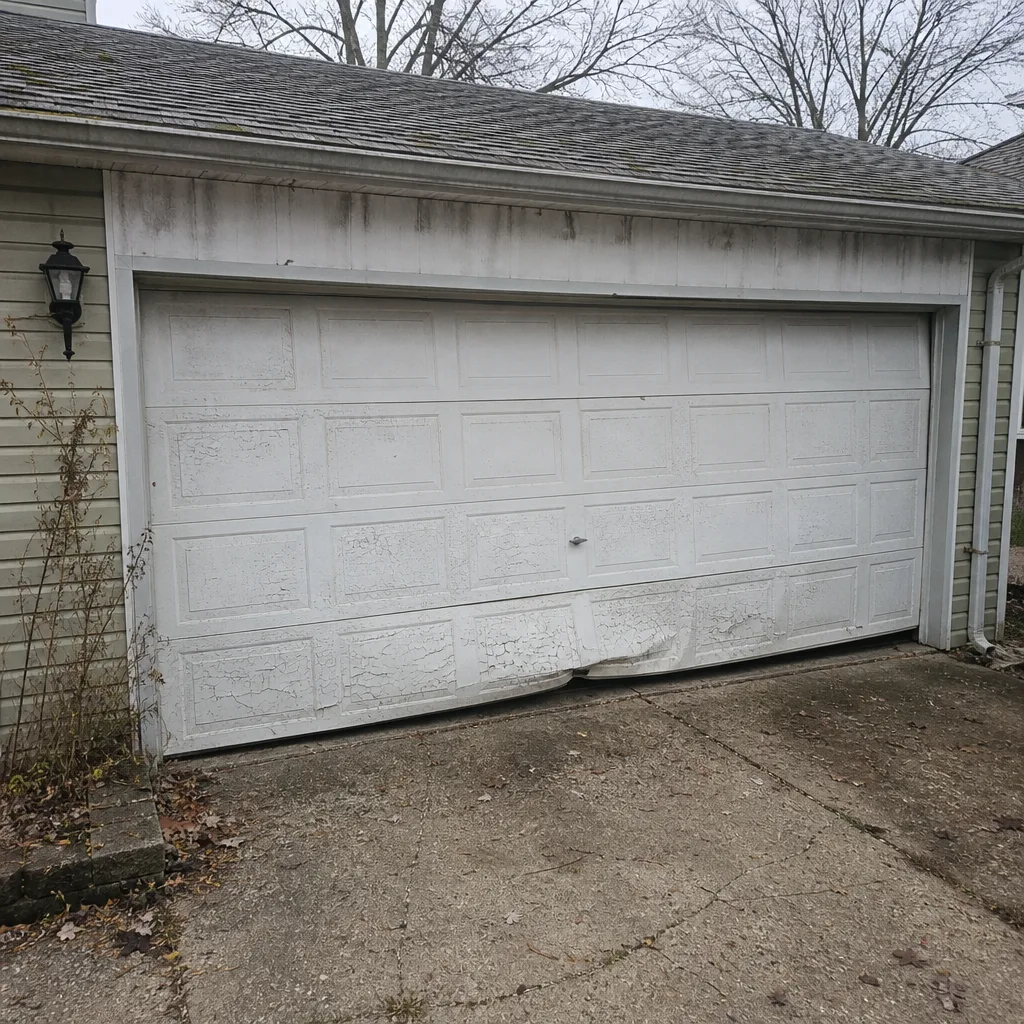 Before
 After
 Before
 After
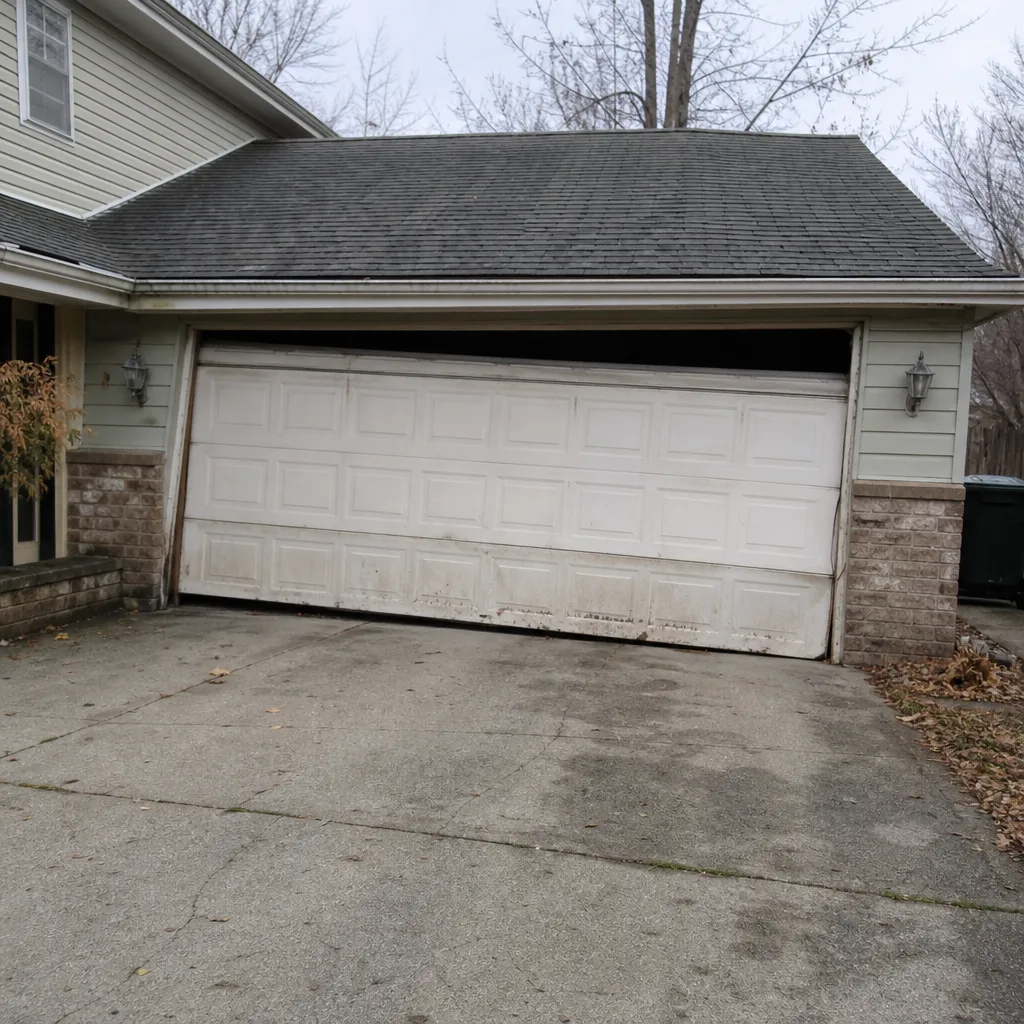 Before
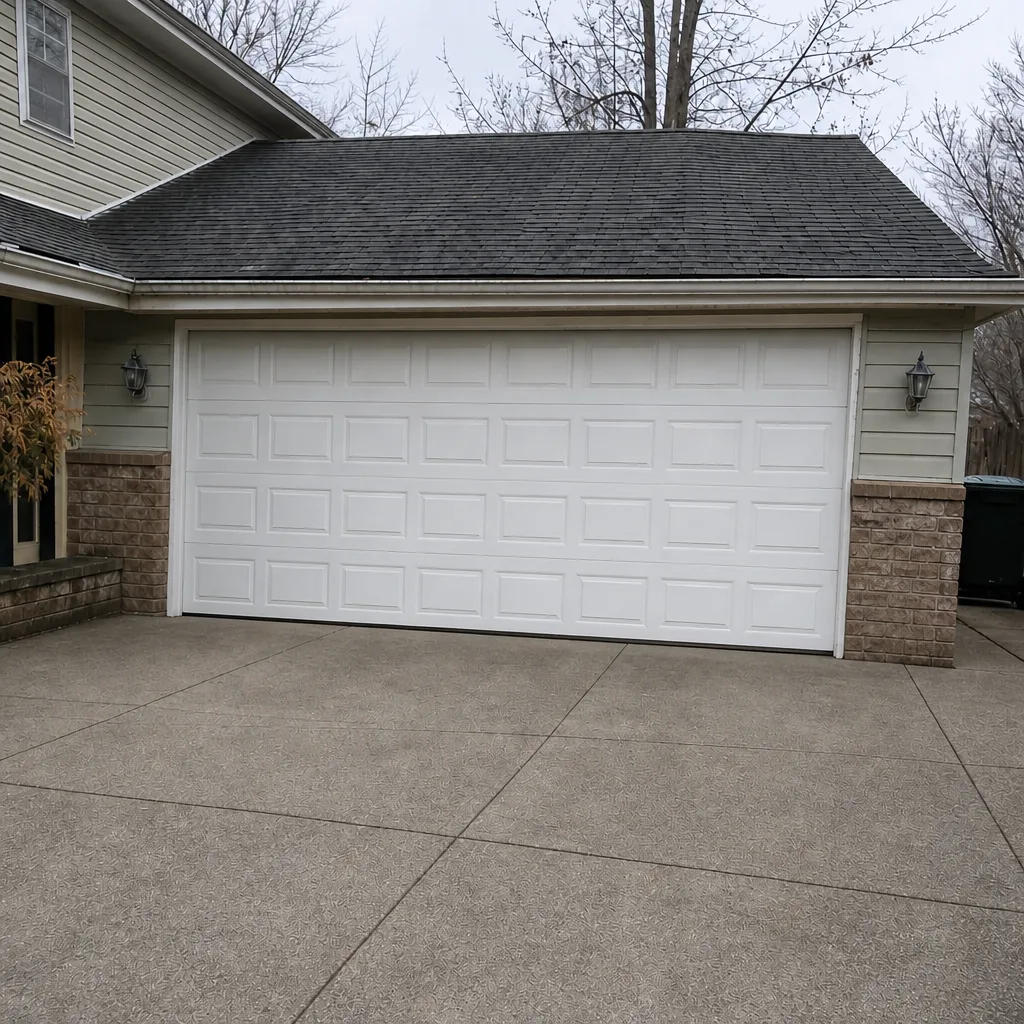 After
When to Call a Professional
One call handles the door, the springs, and the opener. These are the situations where a professional is the right call, regardless of how handy you are:
- Any torsion or extension spring work, including adjustment – not just replacement.
- Any cable, drum, or bottom-bracket work.
- A door that’s come out of its track, or a door that won’t open or close at all.
- Opener installation where you want the UL 325 adjustments done correctly the first time.
- Any door over 15 years old with multiple issues.
Springfield Garage Door Repair Experts offers free estimates in Springfield – call (855) 684-9798. Our technicians have up to 15 years of experience, and we work on the brand already in your garage. Emergency service is available for the situations where a stuck door is creating a safety or security problem.
Frequently Asked Questions
No – not safely. Torsion and extension springs are wound under enough tension to cause serious injury if they release at the wrong moment, and the correct winding rods and protocols are the bare minimum for the work. Have a trained technician handle any spring work, including adjustment.
It depends on your comfort with electrical work and follow-up adjustment. Most of the failure risk is not in the electrical part but in the force-limit and UL 325 safety adjustments, which need to be done per the manufacturer’s manual. If you’re not confident you’ll complete those, have a professional install it.
Typically $150-$500, depending on the mistake. Common ones are stripped drums ($180-$340), bent tracks ($150-$300), and doors off the track ($250-$500). The original part is usually under $60, so the gap between a successful DIY job and a failed one is significant.
Weatherseal replacement, lubrication, remote battery replacement, photo-eye alignment checks, and monthly safety inspections are all DIY-safe. Roller replacement and track straightening sit in the middle tier – doable with the right tools and a second person. Anything involving springs, cables, drums, or the bottom bracket is professional-only.
Some electrical work at the opener may require a permit depending on how it’s wired into the home. Check with the City of Springfield’s building department before installation – they’ll tell you the correct answer for your situation. If you hire a technician, ask whether the work will be permitted.
The vast majority of repair calls resolve in one visit, usually under two hours. Spring replacement, roller replacement, opener repair, and track straightening are all same-visit jobs. Larger work like a full door replacement or new installation gets a written quote first and is scheduled once the door is measured and ordered.
The Bottom Line
The DIY-versus-pro call isn’t about whether you’re handy. It’s about which task is in front of you. Weatherseal, lubrication, and the monthly safety check are DIY-safe and worth doing. Springs, cables, and drums are professional-only, and no amount of confidence changes that. Track, roller, hinge, and opener work is middle tier – doable if you have the tools, the manual, and a second person, but the cost of getting it wrong usually exceeds what you saved. For most Springfield homeowners, the honest calculation is: DIY the small stuff, call for the springs and anything that involves lifting the door, and skip the trial-and-error on installation. Call (855) 684-9798 for a free estimate on any garage door repair, opener service, or new door install in Springfield. Every price is quoted and agreed before any work starts.
Written by the team at Springfield Garage Door Repair Experts.