Last updated November 22, 2026
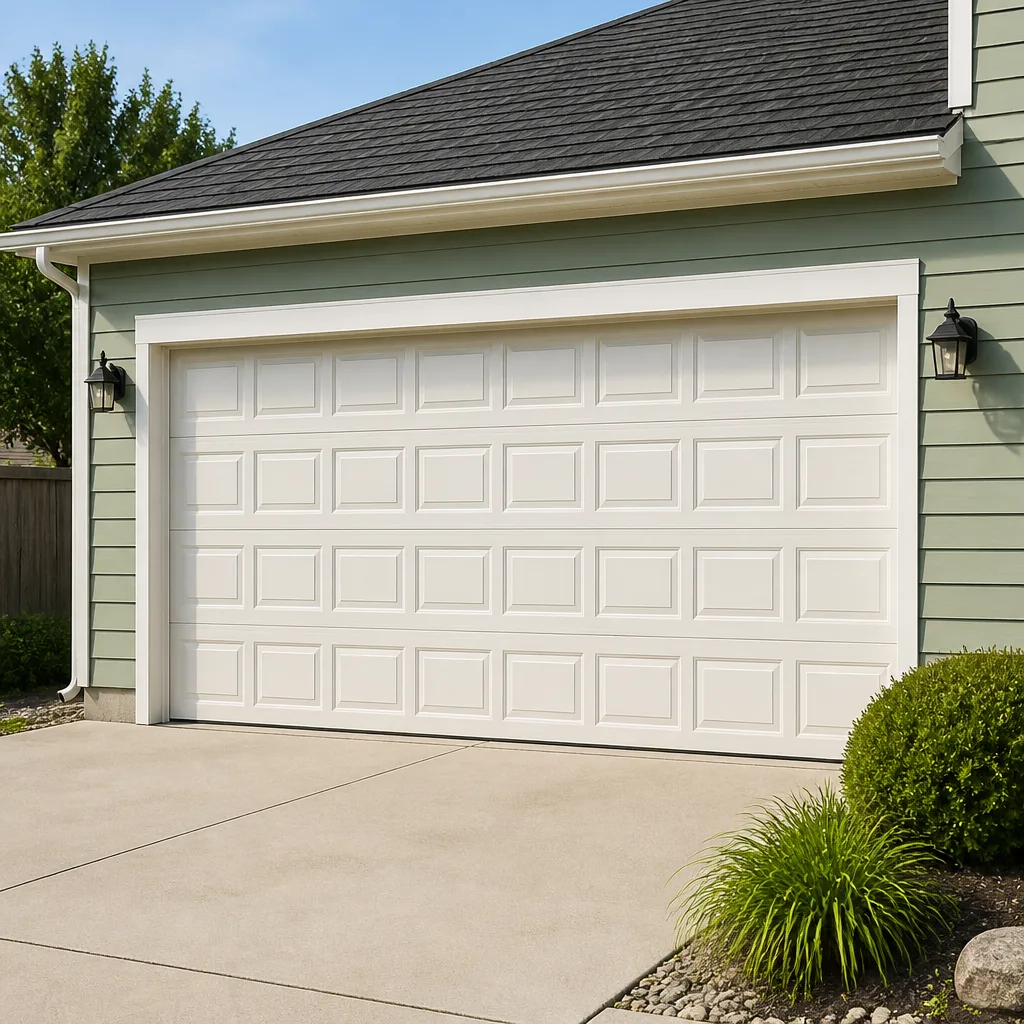 Raised-panel steel
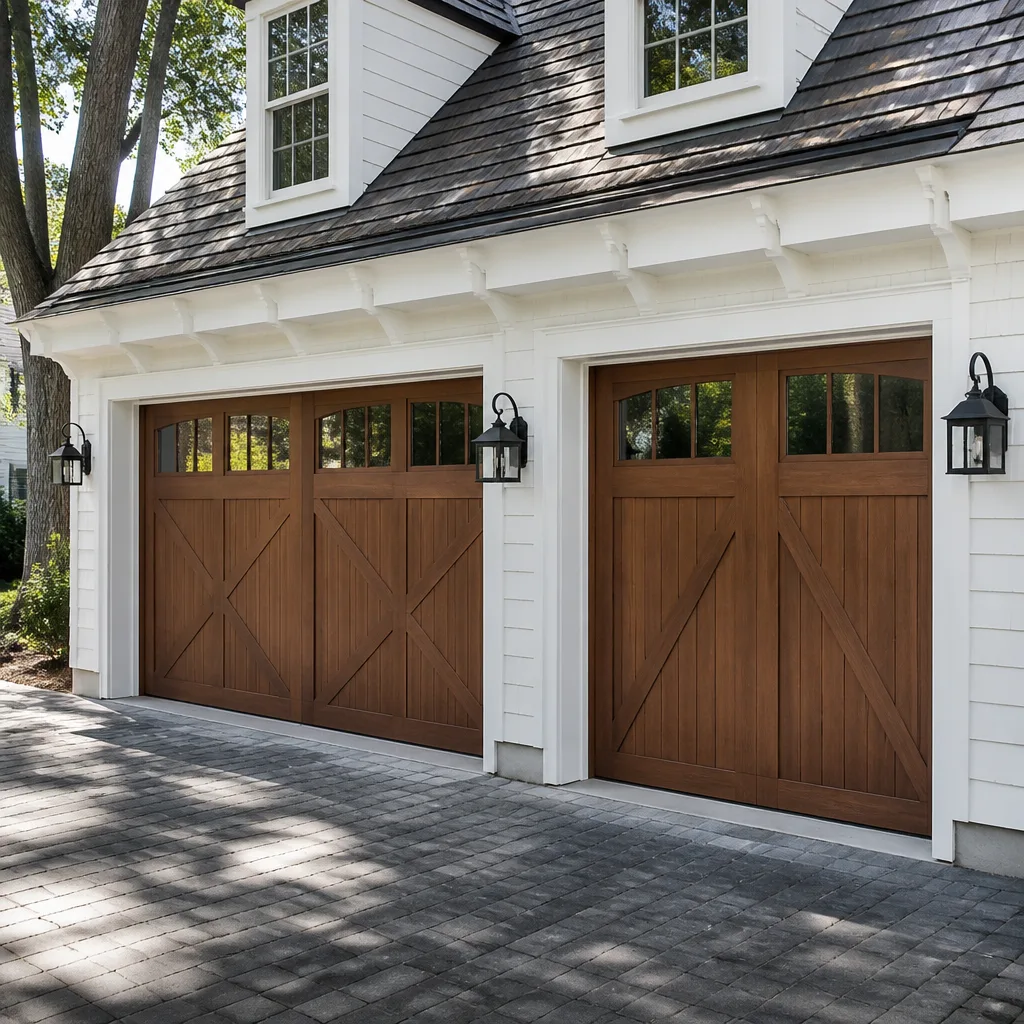 Carriage house
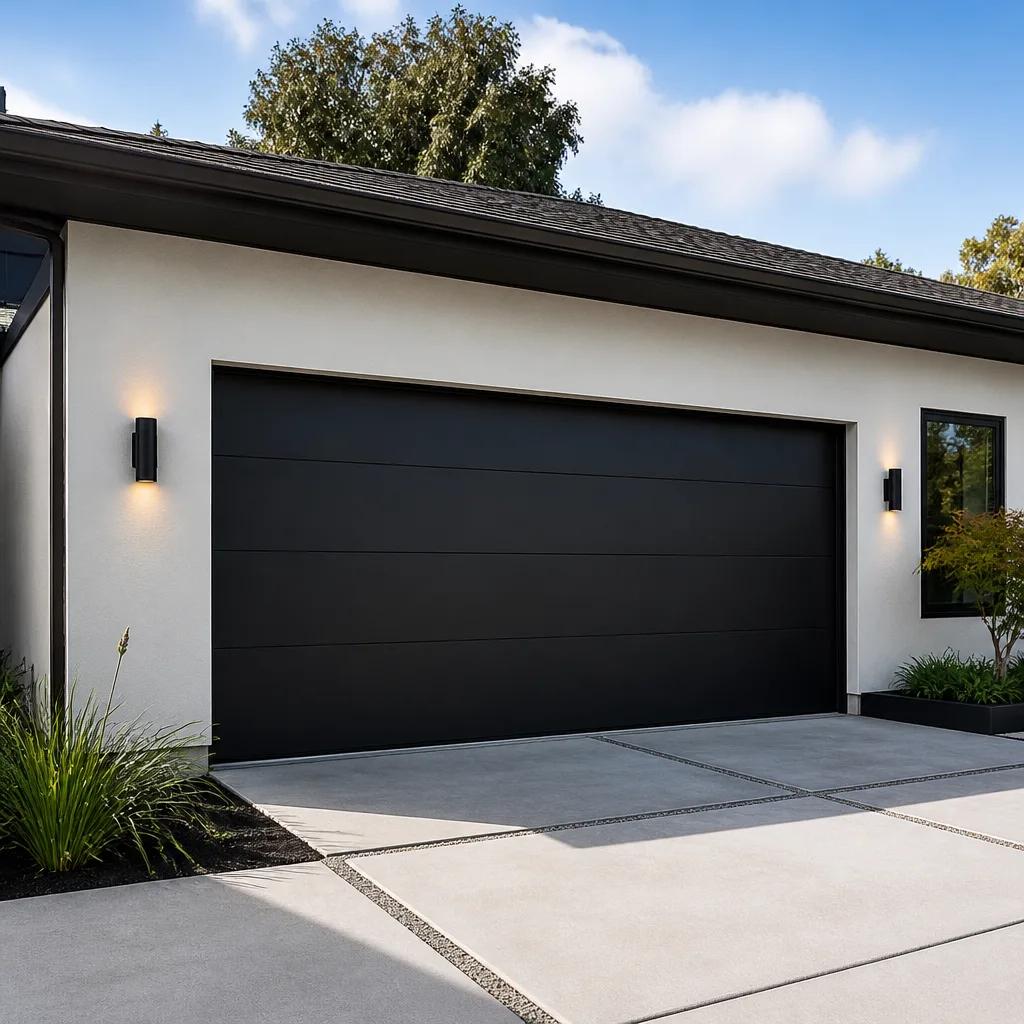 Modern flush
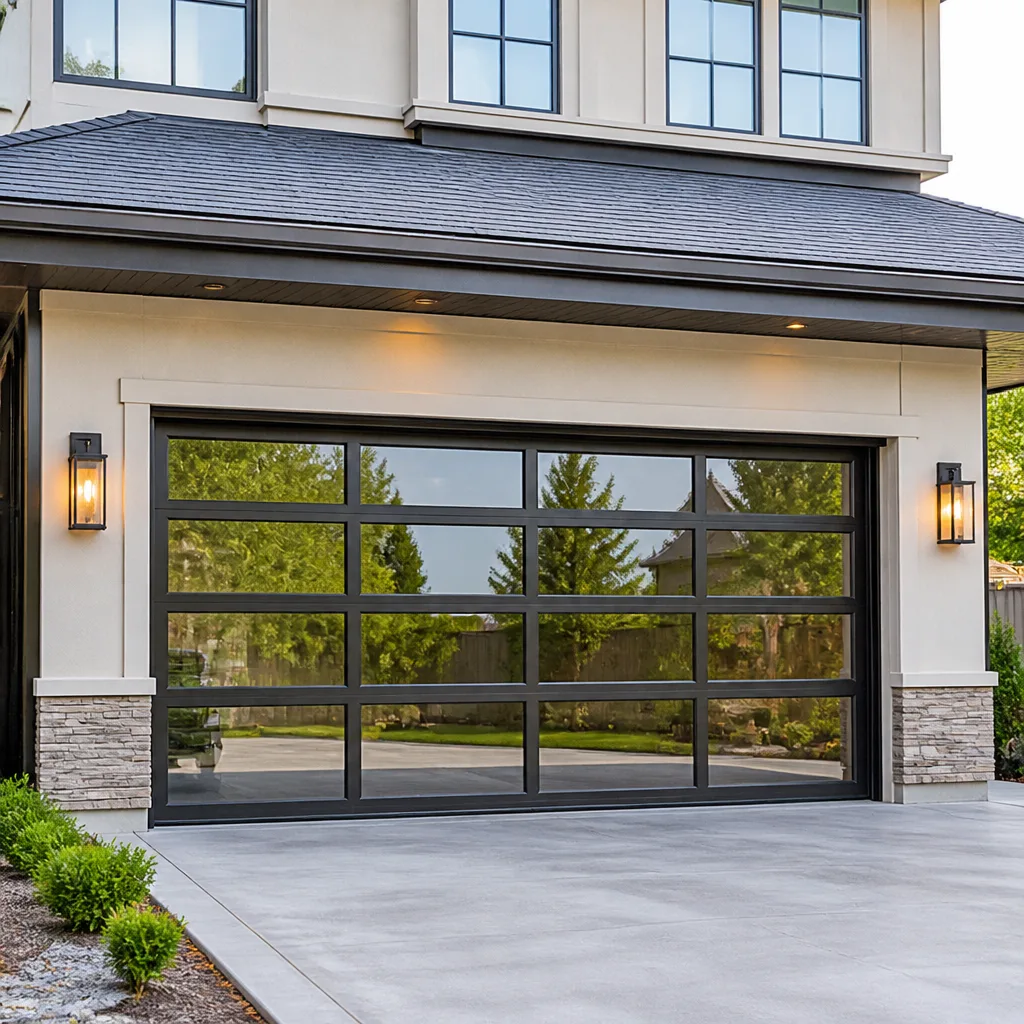 Full-view glass
 LiftMaster openers
 Chamberlain openers
Full 25-point door and opener safety check with every visit - springs, cables, rollers, tracks, and your LiftMaster or Chamberlain opener included
You get a price before we start. It does not change when the pro arrives.
Get your free estimateThe Complete Guide to Garage Doors in Springfield
Most garage door guides are written for a homeowner in Phoenix. Springfield averages 29 freeze-thaw cycles a year, and that single number changes which springs you buy, which lubricants you use, and how often you’ll be calling for service. The swing between a January cold snap and a July humidity spike works on door hardware in a way that milder climates simply don’t. In this guide, we walk through every decision a Springfield homeowner faces, from choosing a door material that survives Ohio humidity to matching track gauge to the ceiling heights in mid-century ranch homes. You’ll learn how spring fatigue actually happens here, what a realistic ten-year cost of ownership looks like, which brands dominate local garages, and when repair beats replacement. No sales pitch, just the roadmap.
Quick Answer
A garage door in Springfield needs a steel or fiberglass door, torsion springs sized for heavy freeze-thaw cycling, and yearly lubrication tuned to Ohio’s humidity swings. Expect repair calls every two to four years on an older door, and budget roughly $180 to $340 for a single torsion spring replacement when it fails. The right material and maintenance schedule matter more here than in milder climates.
Styles & brands we work with
- Raised-panel steel
- Carriage house
- Modern flush
- Full-view glass
- LiftMaster openers
- Chamberlain openers
Table of Contents
- Why Springfield’s Climate Is Hard on Garage Doors
- Which Door Materials Hold Up in Springfield
- The Brands You’ll Actually Find in Springfield Garages
- Matching Door Weight and Track to Springfield Homes
- A Year-Round Maintenance Schedule for Ohio Weather
- Repair or Replace? A Decision Framework
- The Ten-Year Cost of Ownership in Springfield
- What’s Safe to Check and What Isn’t
Why Springfield’s Climate Is Hard on Garage Doors
Springfield sits in a climate band where temperatures cross the freezing point dozens of times each winter. Every one of those crossings is a small mechanical event for a torsion spring. Metal expands as it warms and contracts as it cools, and a spring under constant tension cycles through that expansion and contraction with every thaw. Compare that to a milder climate where the mercury might dip below freezing a handful of times all winter, and the difference in spring life becomes obvious.
The freeze-thaw cycle count is the single best predictor of how often you’ll replace springs in Springfield. A torsion spring rated for a standard number of cycles will hit that number faster here than in a city with a gentler winter. That doesn’t mean springs fail every season, but it does mean a spring you’d expect to last many years in a warm climate may give out sooner in Ohio. We see this pattern repeatedly, and it’s the reason we size springs with local conditions in mind rather than using a generic national replacement.
Humidity is the second half of the story. Springfield summers bring sustained moisture that works on wood overlays, steel joints, and any exposed metal. A wood-composite door that looks beautiful in a dry climate can swell, warp, and delaminate when it lives through an Ohio summer without proper sealing. Steel doors handle humidity well but rust at the bottom edges where moisture collects. Knowing which material fights which local condition is the first decision every Springfield homeowner should make.
- Freeze-thaw: accelerates metal fatigue in springs and hinges.
- Summer humidity: warps wood overlays and feeds rust on steel.
- Temperature swings: stress weather seals and lubricants.
- Seasonal contraction: loosens hardware over time.
Which Door Materials Hold Up in Springfield
For most Springfield homes, steel is the practical winner. It resists the humidity that punishes wood, holds its shape through temperature swings, and comes in insulated versions that help with Ohio’s cold winters. The one weakness is rust at the bottom panel, where road splash and pooled moisture sit. A steel door with a factory-applied finish and a properly maintained bottom seal handles Springfield’s climate well for a long stretch.
Fiberglass is the second strong option. It won’t rust, it’s light enough to reduce strain on the opener and springs, and it holds up to moisture without swelling. The trade-off is that fiberglass can feel less substantial and may not insulate as well unless it’s built with a foam core. For a Springfield garage that’s more storage than living space, a basic fiberglass door makes sense. For an attached garage you want to keep warmer, insulated steel is usually the better call.
Wood and wood-composite doors are where Springfield’s humidity does the most damage. Solid wood expands and contracts with the seasons and needs regular sealing to survive. Wood composite is more stable than solid wood but still vulnerable if moisture gets into the edges or the finish wears thin. If you love the look of wood, plan on more frequent inspection and resealing than a steel door would need. In our experience, a wood door that isn’t maintained through an Ohio summer will show warping within a few years.
Here’s how the three main materials compare for a Springfield garage:
- Steel: best all-around for humidity and temperature swings; watch the bottom edge for rust; insulated versions suit cold winters.
- Fiberglass: no rust, light weight, handles moisture well; pick a foam-core model if insulation matters.
- Wood and wood composite: beautiful but high-maintenance here; needs sealing and regular inspection through humid summers.
Whichever material you choose, the installation and the hardware behind it matter as much as the panel itself. When a door is measured and fitted correctly, it moves without strain, and that extends the life of everything connected to it.
The Brands You’ll Actually Find in Springfield Garages
Walk through Springfield’s neighborhoods and you’ll see the same handful of names on door panels and opener housings again and again. That’s not an accident. These brands dominate the residential market, and they’ve been installed in Ohio homes for decades. Knowing them matters because service availability, parts, and diagnostic know-how all depend on brand familiarity.
On the opener side, LiftMaster and Chamberlain show up everywhere, and they share a lot of internal design. If your opener says LiftMaster or Chamberlain, the technician working on it should know both the smart, Wi-Fi-enabled models and the standard chain and belt drives. Genie and Craftsman are the other two you’ll commonly find, and each has its own quirks in how it handles travel limits, sensors, and remotes. A specialist who works across all of these platforms diagnoses by system knowledge instead of guessing at the problem.
On the door side, Clopay, Amarr, Wayne Dalton, and Raynor are the names we see most in Springfield garages. Each brand builds panels and hardware differently, which affects how a door ages and how it gets repaired. Wayne Dalton doors, for example, often use a proprietary torsion system that behaves differently from a standard setup, and Raynor doors have their own track and panel conventions. A general handyman who doesn’t know the brand will often recommend replacing parts that could be serviced.
- Openers: LiftMaster, Chamberlain, Genie, Craftsman.
- Doors: Clopay, Amarr, Wayne Dalton, Raynor.
We work on the brand already in your garage, which removes the first worry most homeowners have: will anyone actually know my door? Whether it’s a garage door repair job on an older Wayne Dalton or a fresh opener install on a Chamberlain, the diagnosis starts with recognizing the system in front of us. If you’re weighing a repair on a brand you’re not sure anyone local handles, garage door opener repair covers the opener brands you’ll find here, and the door brands above are all within our scope.
Matching Door Weight and Track to Springfield Homes
Springfield’s housing stock leans heavily on mid-century ranch and split-level homes, and those homes come with garage ceilings that aren’t quite standard. Many have lower clearances than newer construction, and some split-levels place the garage under living space with a tighter headroom than a modern build. That geometry directly affects which door weight and track gauge will work without binding or rubbing.
Door weight and spring sizing go together. A door that’s too heavy for its springs puts constant strain on the opener and wears the springs faster. A door that’s too light for its springs causes the door to slam or drift. In a climate with heavy freeze-thaw cycling, that extra strain compounds. Getting the weight-to-spring match right at installation is one of the most important steps for a Springfield door, and it’s something a generic off-the-shelf setup often gets wrong.
Track gauge matters too. Lighter-gauge track flexes more, and in a home where the ceiling is low and the door has limited travel room, flex leads to misalignment and noise. A heavier-gauge track holds its line better and tolerates the seasonal movement of an Ohio garage. The following steps are how a proper fit is worked out for a Springfield home:
- Measure the garage ceiling height and the available headroom, including any ductwork or structural beams.
- Weigh the door panel assembly or confirm the manufacturer’s rated weight.
- Match the torsion or extension spring to that weight, accounting for the local freeze-thaw load.
- Select track gauge that suits the door weight and the installation’s travel geometry.
- Test the full open-close cycle and adjust spring tension so the door balances at mid-travel.
If your home is a split-level with a low garage ceiling, or a ranch where the door has been replaced but the original track stayed, this matching is worth a close look before any new hardware goes in. It’s the difference between a door that runs quietly for years and one that rattles and needs constant adjustment.
A Year-Round Maintenance Schedule for Ohio Weather
Springfield’s four real seasons mean a door needs maintenance tuned to each one. A schedule that works in a mild climate won’t cut it when temperatures swing 29 times across the freezing point in a single winter and then turn humid for months. The good news is that most of this maintenance is simple visual inspection and lubrication, not repair.
Lubrication is the highest-value task. A lubricant rated for wide temperature swings stays effective when the garage is cold in January and warm in July. A lightweight household oil can thicken in cold and attract grit in summer humidity. We recommend a purpose-made garage door lubricant on hinges, rollers, and the spring, applied at the change of seasons. This one habit alone extends the life of the moving parts noticeably.
Weather seals need attention too. The bottom seal keeps out moisture and pests, and it takes the brunt of temperature swings. If it’s cracked or stiff, it stops sealing and lets moisture reach the door’s bottom edge, which is exactly where steel rusts. Check it each season and replace it when it loses flexibility. The same goes for the side and top seals, which keep the weather out of the garage.
- Spring: lubricate hinges, rollers, and springs; check weather seals after winter; look for rust at the bottom panel.
- Summer: check for warping on any wood or wood-composite door; confirm the door still balances; inspect for humidity-driven swelling.
- Fall: tighten hardware loosened by seasonal contraction; test the opener’s safety reverse; re-lubricate before cold sets in.
- Winter: clear snow and ice from the door’s path; watch for sluggish operation in cold snaps; check that the door seals fully.
Any time of year, listen. A door that suddenly gets louder, grinds, or jerks is telling you something is off. Catching a small issue before it becomes a broken spring or a dead opener is the whole point of a maintenance schedule in a climate like this.
Repair or Replace? A Decision Framework
Most homeowners in Springfield want to know whether they should fix their door or replace it, and the honest answer depends on the door’s age, its material, and how many systems are failing at once. Our rule of thumb is repair first, replace only when it makes sense. A single broken spring, a worn roller, or a misaligned track is a repair. A door that’s rusted through, warped beyond sealing, or failing on multiple fronts is a replacement candidate.
Run through these questions before deciding:
- Is the door structure sound? A panel that’s cracked, rotted, or rusted through is hard to justify repairing.
- How many separate failures? One issue, repair it. Springs, tracks, and opener all failing at once, replacement may cost less over time.
- Is the material vulnerable here? A wood door that’s warped through several humid summers is fighting a losing battle in Springfield.
- Does the hardware match the door? A replacement door on old, undersized springs will keep failing.
- How’s the balance? A door that won’t stay at mid-travel needs spring or hinge work, but if the whole assembly is worn, replacement is cleaner.
A note on springs specifically: a broken spring is the most common call we get, and it’s almost always a repair, not a reason to replace the whole door. If your door’s structure is fine and the springs are the failure, you keep the door. Where it gets murky is a door that’s structurally sound but on its second or third spring set with a tired opener behind it. That’s when we sit down with a homeowner and talk through the math honestly rather than pushing the bigger job.
The Ten-Year Cost of Ownership in Springfield
A garage door isn’t a one-time purchase; it’s a piece of equipment with a service life and predictable repair costs. Planning ten years out helps a Springfield homeowner avoid surprises, and it makes the repair-versus-replace decision clearer. The following figures are typical ranges for this market and are estimates; the written quote you get before any work starts sets the final price.
On the repair side, the most frequent line item is a spring. A single torsion spring replacement typically runs $180 to $340. If both springs are replaced together, which is common when a matched pair is worn, expect roughly double that single-spring range. Opener repairs depend on what’s failing: a remote or sensor issue is usually a modest fix, while a board or motor replacement costs more. Rollers and hinges are inexpensive, and a tune-up with lubrication and adjustment is a small annual investment that pays for itself in avoided repairs.
Here’s a rough ten-year picture for a typical Springfield door, assuming a sound door and a repair-first approach:
- Years 1-3: routine lubrication and minor adjustments; occasional roller or hinge replacement.
- Years 3-6: likely one spring set replacement, given the local freeze-thaw load; possibly an opener repair.
- Years 6-10: a second spring set is realistic on an older door; track adjustment; weather seal replacement.
- Any year: an emergency call if the door won’t close, which we treat as a core service, not an upsell.
Across ten years, most Springfield homeowners should expect a handful of service calls rather than none. That’s not a sign the door is failing; it’s what the local climate does to moving parts. Budgeting for regular service and replacing springs promptly when they wear keeps the total lower than ignoring small problems that turn into opener failures. For a closer look at what a spring job involves, our garage door spring repair page walks through the specifics.
What’s Safe to Check and What Isn’t
Some garage door parts are safe for a homeowner to inspect. Others are genuinely dangerous to touch, and a trained professional should handle them every time. Knowing the line between the two protects you. Inspections like listening for noise, checking the weather seal, and confirming the door is balanced are all fine to do yourself. Working on a torsion spring or the cables that hold the door’s weight is not.
Torsion springs and the cables under tension store a large amount of energy. If one lets go while someone is working on it, the result can be serious injury. That’s why we handle spring work as a core specialty, with proper tools and safety protocol, and it’s why a general handyman often declines the job. It’s also why we don’t recommend do-it-yourself spring work here. The same caution applies to any electrical work inside the opener and to the door’s lifting system under load.
The 1993 federal safety standard for residential openers requires a non-contact reversal system, which you can and should test regularly. Place a small object in the door’s path and confirm the door reverses when it contacts it. If it doesn’t, stop using the opener and call a professional. Same for any door that won’t stay up, closes unevenly, or moves erratically. Those symptoms point to spring or cable issues that need a trained eye.
If your door is stuck open or won’t move at all, emergency service is available for situations where a malfunctioning door creates an immediate safety or security risk. When the door is jammed, the call is the right move. For everything else, a scheduled repair works, and a Springfield Garage Door Repair Experts specialist can diagnose the whole system in one visit.
Common Mistakes to Avoid
- Buying a wood door and skipping the sealing schedule. Springfield’s humid summers will warp an unsealed wood or wood-composite door faster than you’d expect. Budget for regular resealing before you buy.
- Replacing a spring without checking the partner spring. Springs are often replaced as a matched pair. Replacing one and leaving a tired partner in place usually means a second call months later in this climate.
- Running a door that won’t stay up. A door that won’t hold at mid-travel has a spring or cable problem. Continuing to operate it invites opener damage and a more expensive repair.
- Ignoring rust at the bottom panel. In a humid Ohio climate, rust at the bottom edge spreads. Catch it early and treat it; wait and you’re looking at a panel replacement.
- Letting the opener carry the door’s weight. If the springs are worn, the opener strains to lift the door. It will fail sooner and cost more to fix, so address the springs first.
- Using the wrong lubricant. Lightweight household oil thickens in cold and collects grit in summer. Use a garage-door-rated lubricant that holds up across Springfield’s temperature swings.
- Mismatching new door weight to old springs and track. A replacement door needs springs and track sized to its weight and your ceiling height, or it will bind and wear out fast.
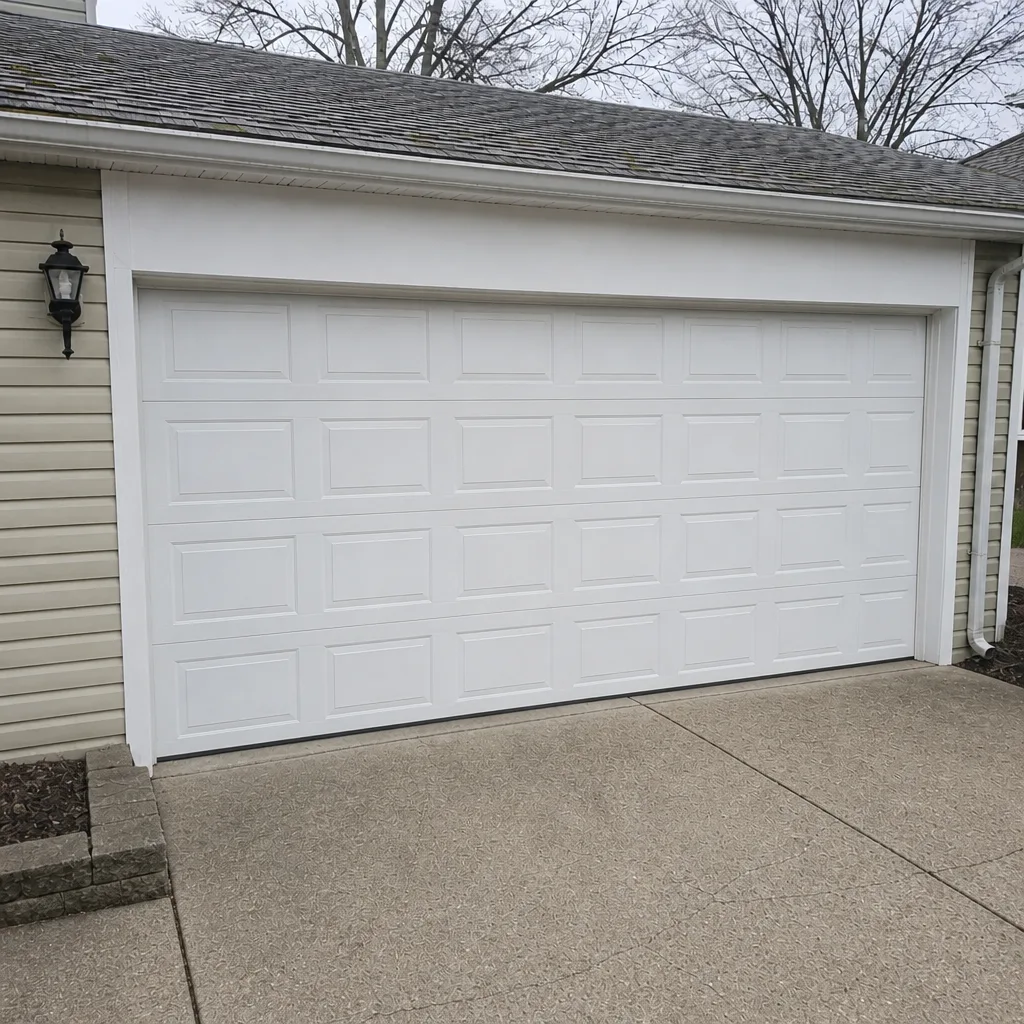
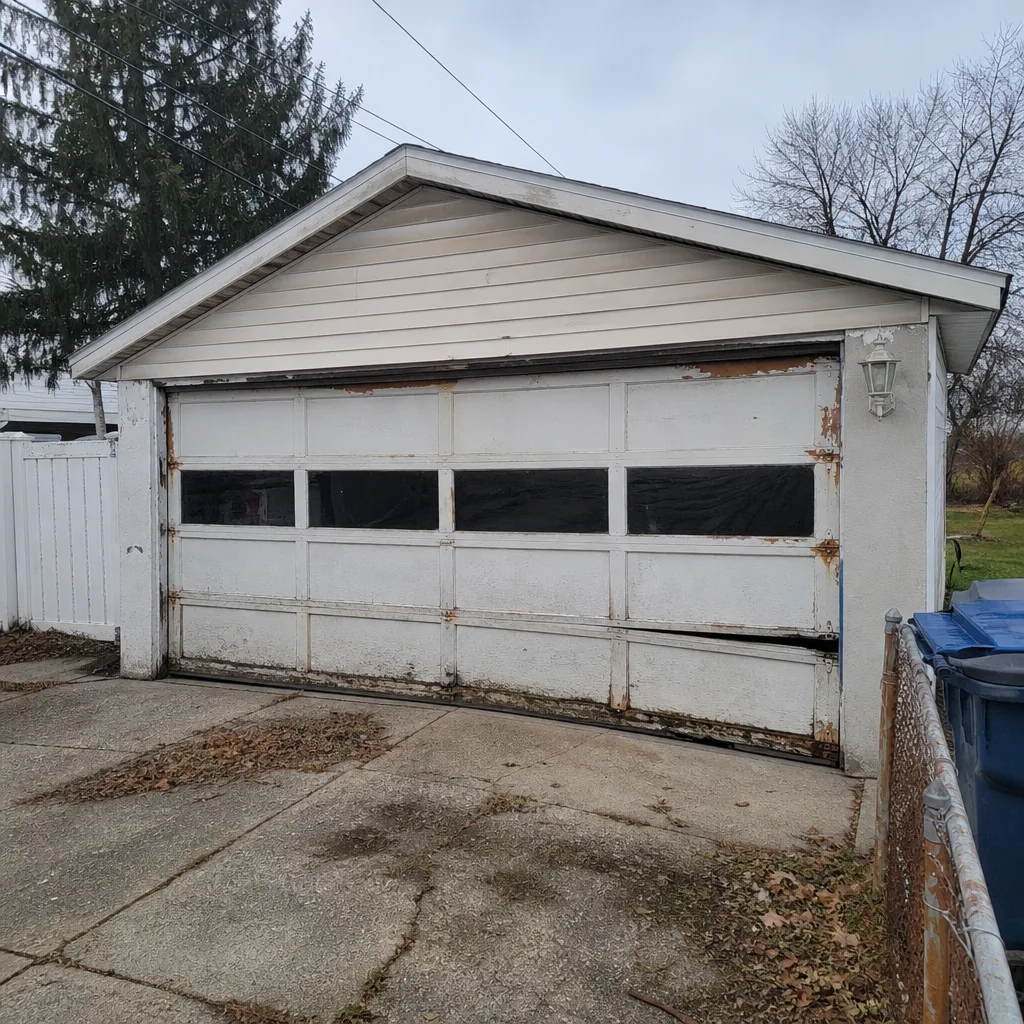
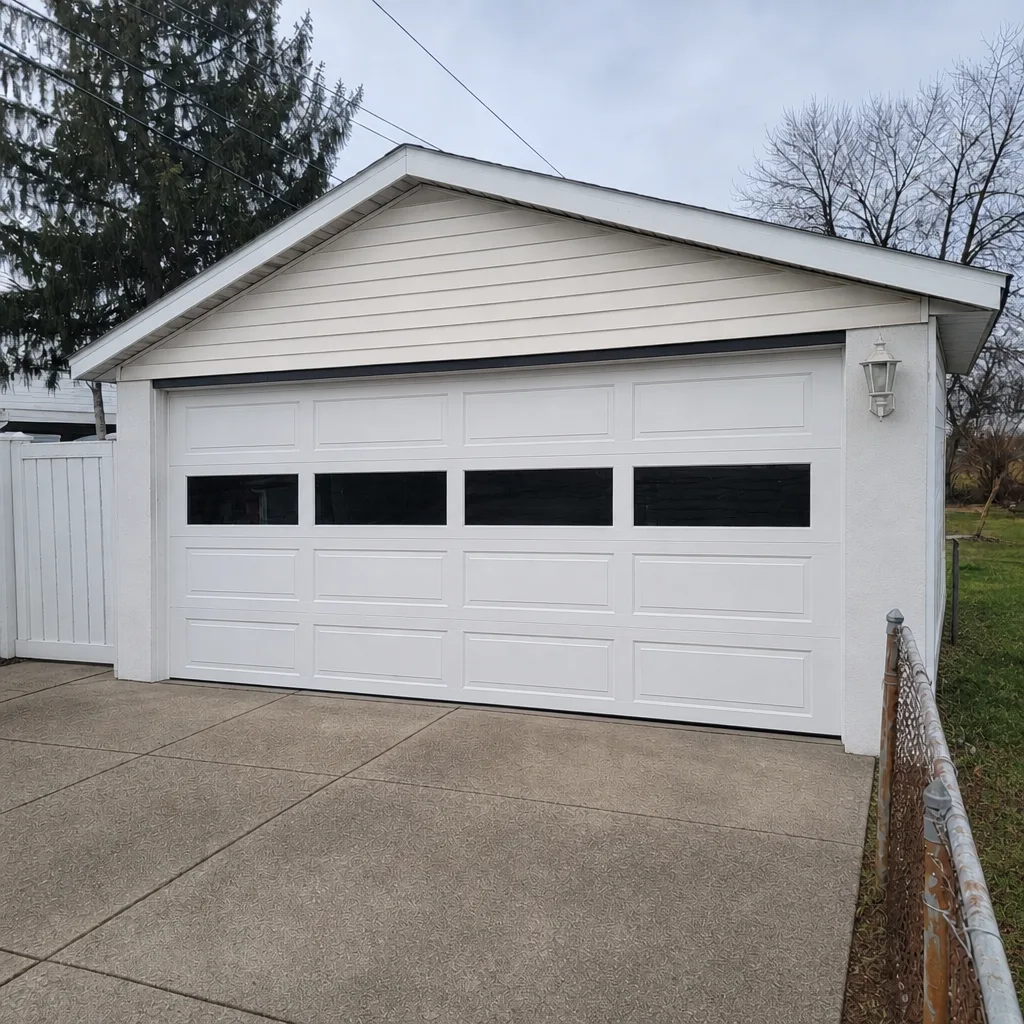
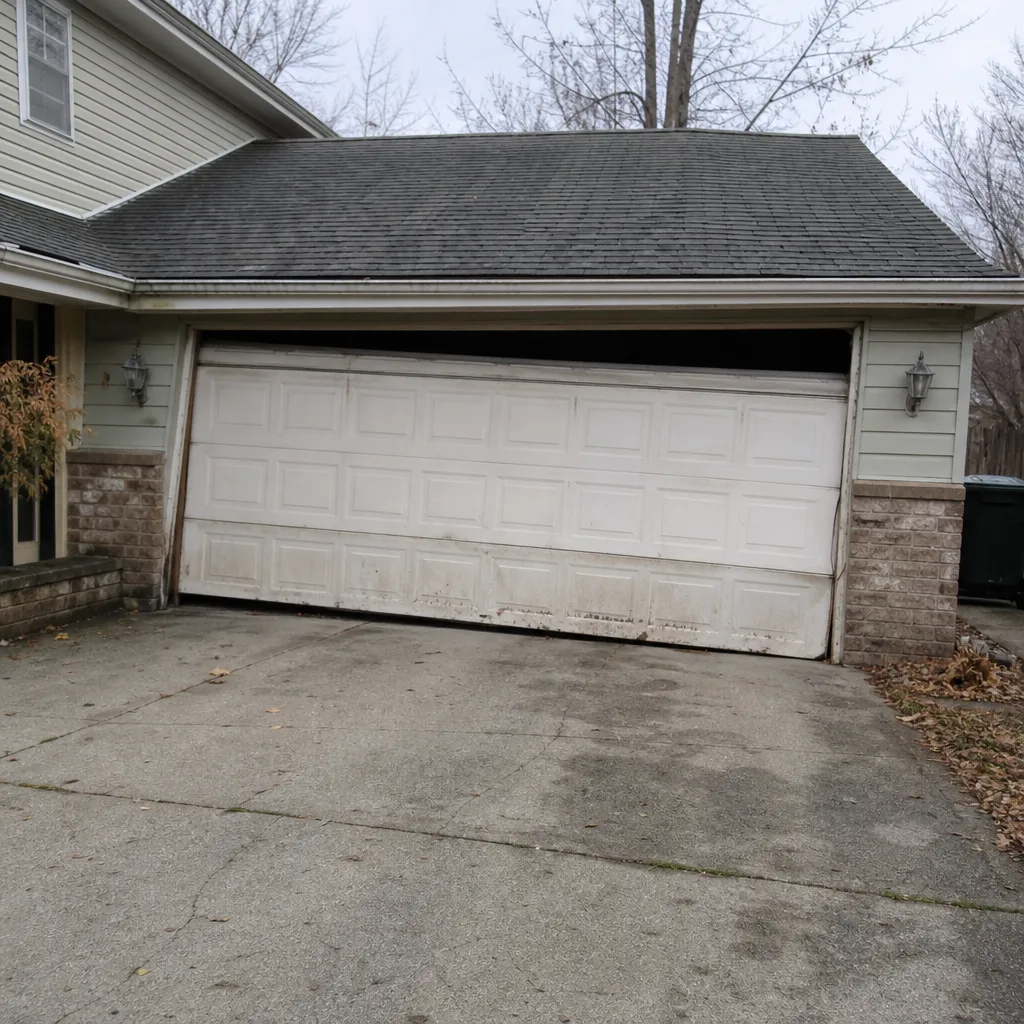
See the difference
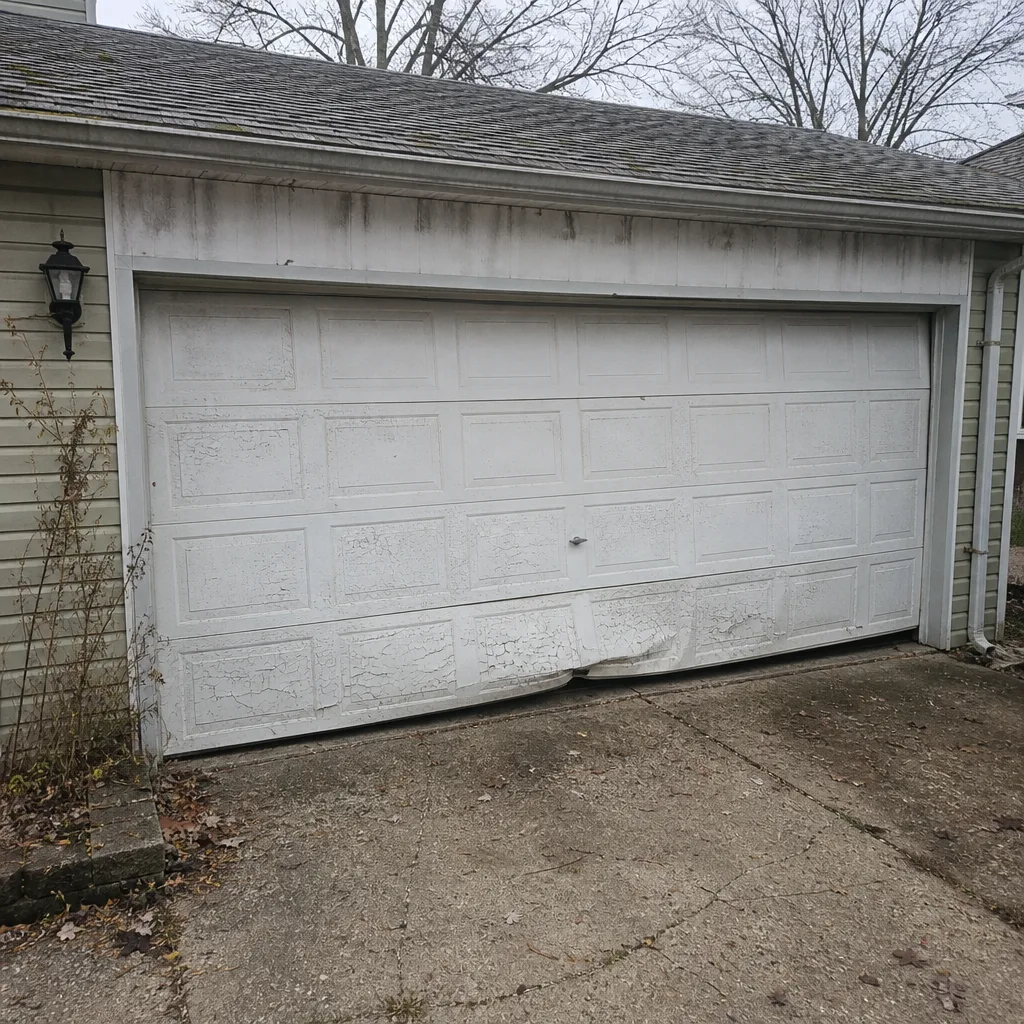 Before
 After
 Before
 After
 Before
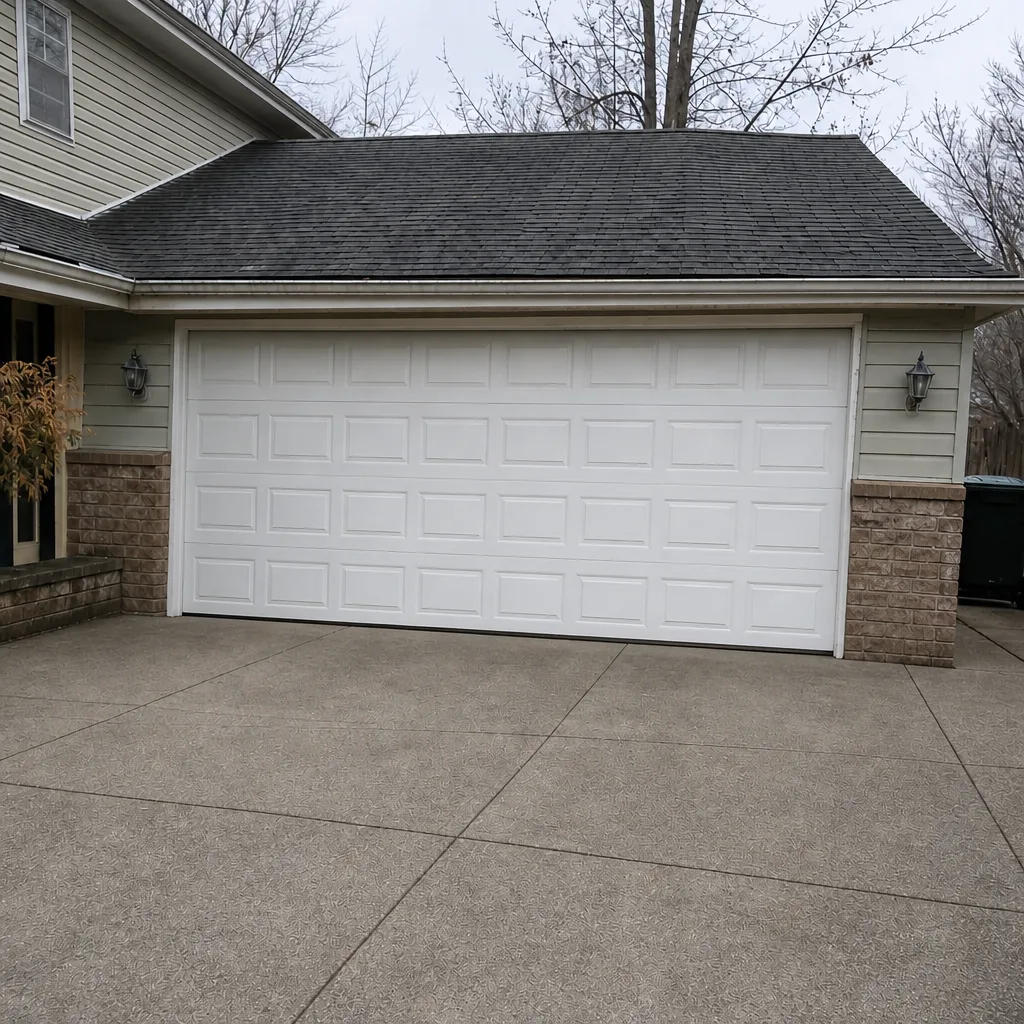 After
When to Call a Professional
Call a professional for anything touching the springs, cables, or lifting mechanism. Those parts hold the door’s weight and store energy; a mistake there is a safety issue, not just a repair delay. Call us when a spring snaps, the door won’t open or close, the opener runs but the door doesn’t move, the door comes off its track, or a panel is visibly damaged. Call for an opener that won’t reverse, a door that drifts or slams, and any noise that appeared suddenly. And call for a new door so it’s measured and fitted correctly from the start. Springfield Garage Door Repair Experts offers free estimates in Springfield and handles repair and replacement under one company, so the door, the springs, and the opener are one call. Reach us at (855) 684-9798.
Frequently Asked Questions
Springs in Springfield typically wear faster than in milder climates because of the 29 freeze-thaw cycles a year, which adds fatigue with every temperature swing. There’s no fixed timeline, but a spring that’s several years old and starting to sound strained is a candidate for replacement before it fails. Call (855) 684-9798 for a free assessment of your springs.
A single torsion spring replacement in Springfield typically runs $180 to $340. Matched pairs are usually replaced together, so a pair costs about twice that single-spring range. Prices are estimates, and the written quote you get before work starts sets the final price. Call (855) 684-9798 for an exact quote, which is free.
Emergency garage door service is a core offering, and we aim to respond promptly when a door is stuck open, won’t close, or won’t move at all. Availability varies, so call early. For non-emergency repairs, we’ll schedule a visit quickly. Call (855) 684-9798 to book.
Steel is the most reliable for Springfield’s humid summers and freeze-thaw winters, especially an insulated version for cold months. Fiberglass is a solid second choice if you want something rust-free and lighter. Wood looks great but needs regular sealing and inspection here.
Not necessarily a different spring, but the right spring for the door’s actual weight. Springfield’s mid-century ranch and split-level homes often have lower garage ceilings and doors that weigh more than a modern basic model, so the springs and track must be sized to match. A proper measurement and weight match prevents binding and premature wear.
We work on the brands most Springfield garages already have: LiftMaster, Chamberlain, Genie, Craftsman, Clopay, Amarr, Wayne Dalton, and Raynor. That covers standard drives, belt and chain openers, smart Wi-Fi models, and a wide range of door panels. Call (855) 684-9798 if you’re unsure about yours.
The Bottom Line
Springfield’s climate asks more of a garage door than most national guides assume. Heavy freeze-thaw cycling wears springs faster, Ohio humidity punishes wood and feeds rust, and mid-century homes need door weight and track sized to their ceilings. Choose steel or fiberglass for durability, match springs and track to the door, keep a seasonal lubrication schedule, and repair first until replacement truly makes sense. Plan for a handful of service calls over ten years rather than none. When something touches the springs or cables, call a trained professional.
Get a Free Estimate Today
Whether your door is throwing a noise you can’t place, a spring has let go, or you’re weighing a new door against another repair, we’ll look at the whole system and give you an honest answer. Springfield Garage Door Repair Experts works on the door, the springs, and the opener, so you don’t need a second contractor. Emergency service is available when the door won’t move, and every job starts with a written estimate agreed before any work begins. Call (855) 684-9798 for a free estimate and tell us what your door is doing.
Written by the team at Springfield Garage Door Repair Experts.